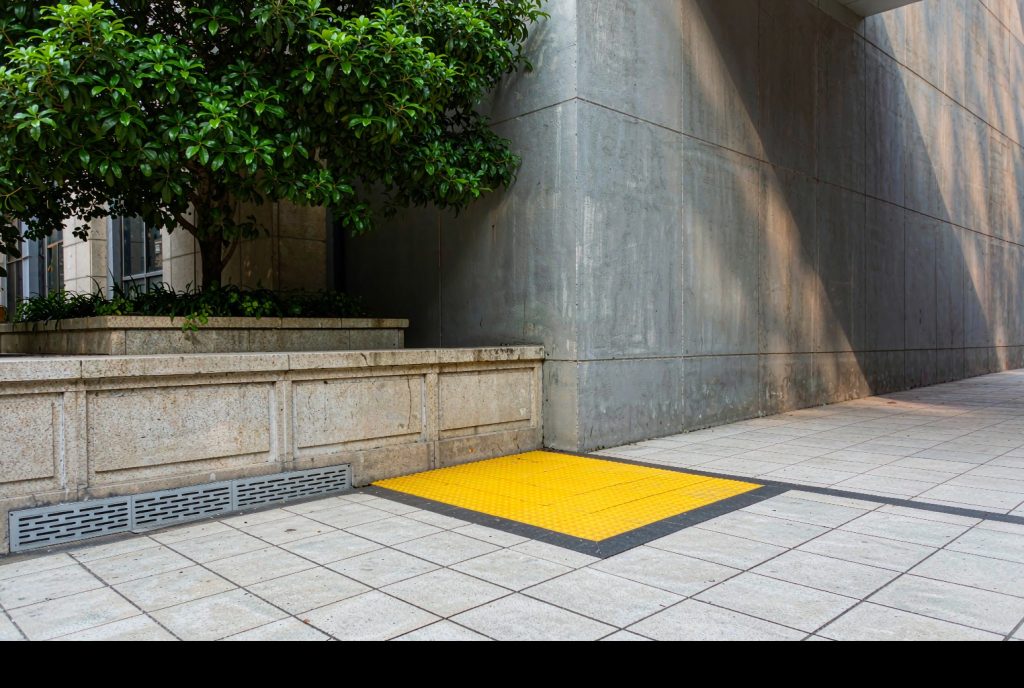
The yellow pads with rows of bumps at street corners and transit platforms are one of the most recognizable yet least understood elements of public infrastructure. They are detectable warning surfaces, a standardized tactile cue that tells a pedestrian who is blind or has low vision that they are about to leave the safe walking path and reach a roadway or platform edge. Understanding what they are, where they go, and how they relate to tactile signs clears up a common point of confusion.
What the bumps actually are
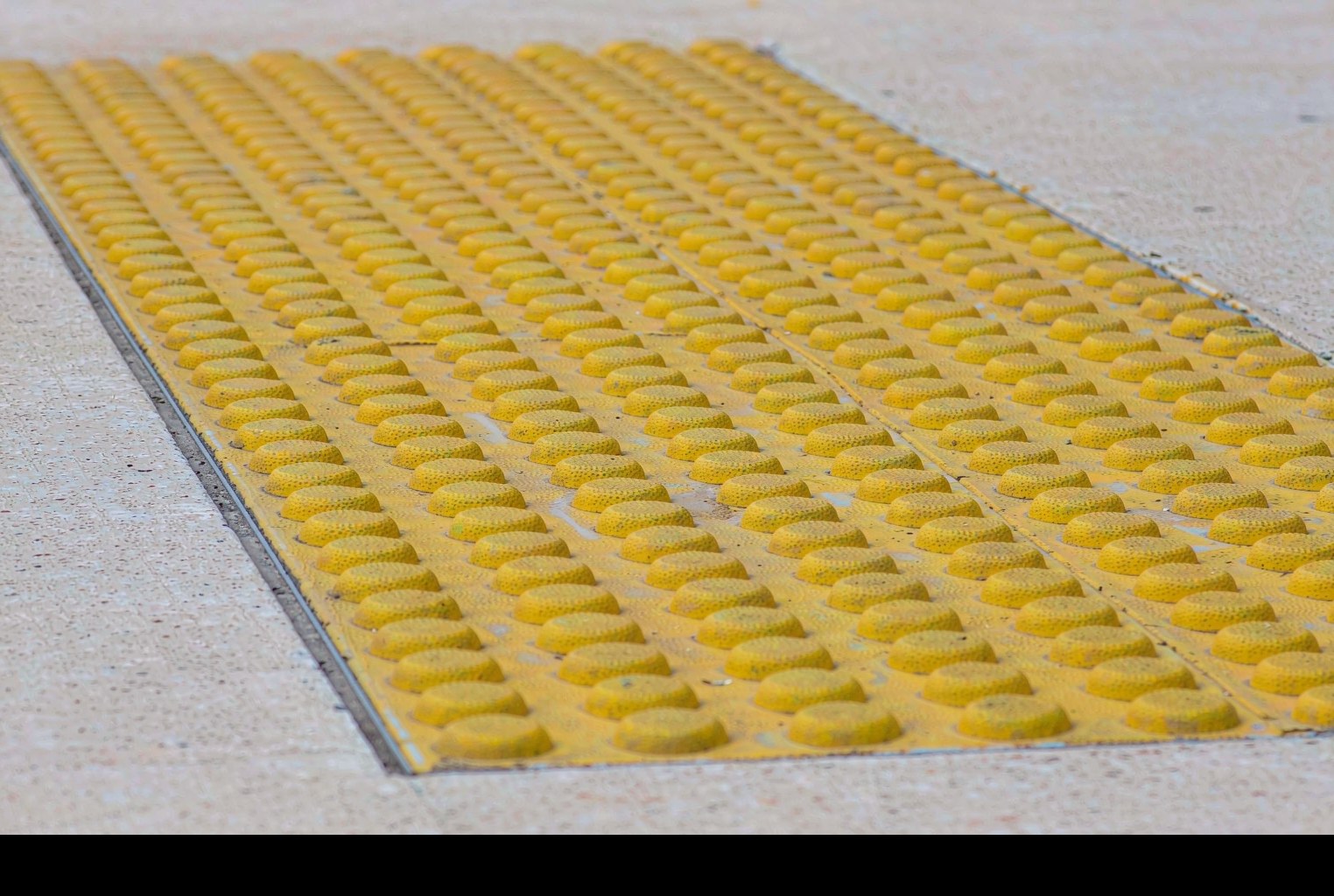
The surface uses truncated domes — small, rounded bumps arranged in a grid — set into a contrasting yellow field. A cane user feels the change underfoot, and a low-vision user sees the bright color, both signaling “stop and reassess.” The yellow is deliberate: it stands out against concrete and asphalt so the cue works visually as well as tactually. This is a warning surface, distinct from the directional tactile strips that guide a traveler along a path.
Where they are required
Detectable warning surfaces are specified at the boundary between a walking surface and a hazard: curb ramps at street crossings, the edges of train and metro platforms, and the tops of stair descents. The placement is about predictability — a traveler learns that reaching the domes means a road or track is immediately ahead. That consistency is what makes the system usable across an entire city.
How they relate to tactile signs and ADA compliance
Tactile warning surfaces and tactile signs are cousins in the same family of accessibility design. Tactile signs, such as room identification with raised characters and Braille, communicate information at a fixed point; warning surfaces communicate a hazard through the walking surface itself. Both fall under accessibility frameworks like ADA compliance, but they solve different problems: one tells you where you are, the other tells you to stop. Specifiers who confuse the two usually end up with the right intent but the wrong product in the wrong place.
How Duoyuan approaches accessible environments
For public and transit projects, the workshop supplies tactile and accessible signage that complements warning surfaces rather than duplicating them. Durable, high-contrast materials are chosen for outdoor exposure, and placement follows the same consistency principle as the domes themselves, so the whole environment reads predictably to every user.

Frequently asked questions
What are the yellow bumps called?
They are detectable warning surfaces, specifically truncated domes, used to warn travelers of a road or platform edge.
Why are they yellow?
The bright color provides a strong visual contrast against pavements, so the cue works for low-vision users as well as cane users.
Are they the same as tactile signs?
No. Warning surfaces signal a hazard underfoot; tactile signs convey information like room names through raised characters and Braille.
Where must warning surfaces be installed?
At the edge between a walkway and a hazard: curb ramps, transit platform edges, and stair tops.
Do they relate to ADA compliance?
Yes. Both warning surfaces and tactile signs are part of accessibility standards, but they address different needs.
For accessible signage, see the product range, the solutions overview, and the capabilities page. The FAQ covers more compliance topics, and the quote page asks about your project type. Examples are in the case studies, and the about page describes the workshop.







