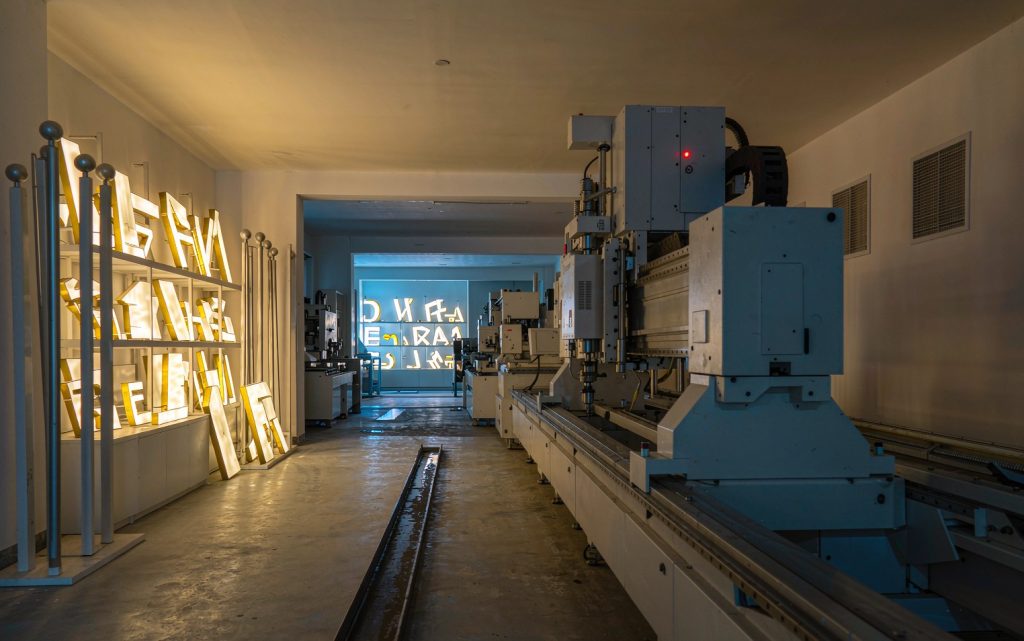
For architects, developers and purchasing teams evaluating custom signage China, the real question is rarely about a single sign. It is about who carries responsibility when a hundred different sign types, spread across several buildings, all have to arrive on site, fit the drawings and still look like one coherent family. That question is what our team answers every day at our 5,000 m² production base in Baiyun District, Guangzhou, where design, fabrication and export operations sit on one site.
Duoyuan Advertising is the signage division of Guangzhou Huaqi Duoyuan Technology Co., Ltd. As an architectural signage manufacturer serving clients in more than 30 countries, we have built our workflow around a simple principle: the factory should be involved from the first drawing, not only after the order is placed. This article opens up that workflow — how a signage factory Guangzhou turns DWG files into approved shop drawings, how wayfinding systems are planned before anything is cut, and how export-ready crates leave our dock with the documentation installers actually need.
What an Architectural Signage Manufacturer Is Accountable For
A sign shop produces objects. An architectural signage manufacturer delivers a coordinated system, and accepts responsibility for the interfaces between those objects and the building. On a typical mixed-use or civic project that means one team owning the visual language, the structural engineering, the electrical details and the sequence of delivery across every sign family.
Our scope covers six linked product systems, all engineered from the same project drawings and finished to the same approved samples:
- Complete wayfinding and directional signage systems — master planning, directories, floor identification and accessible signage for malls, healthcare campuses and transit hubs.
- Architectural monument signs and freestanding pylons — large-scale illuminated landmarks with structural calculations and weatherproof construction.
- Illuminated channel letters and facade signs — 3D metal letters in front-lit, halo back-lit and edge-lit configurations, including rooftop installations.
- Brand identity signage — reception logo walls, etched plaques and architectural entrance features.
- Spatial displays and cultural walls — bespoke sculptures, environmental graphics and atrium installations.
- Parking guidance and traffic safety signage — underground car park wayfinding, LED indicators, road markings and regulatory signage.
Keeping all six under one roof is what lets a single approval sample govern an entire package. Our published specifications reference SS304 and acrylic constructions, IP65-rated assemblies and a two-year warranty, and those standards are applied consistently rather than renegotiated sign by sign.
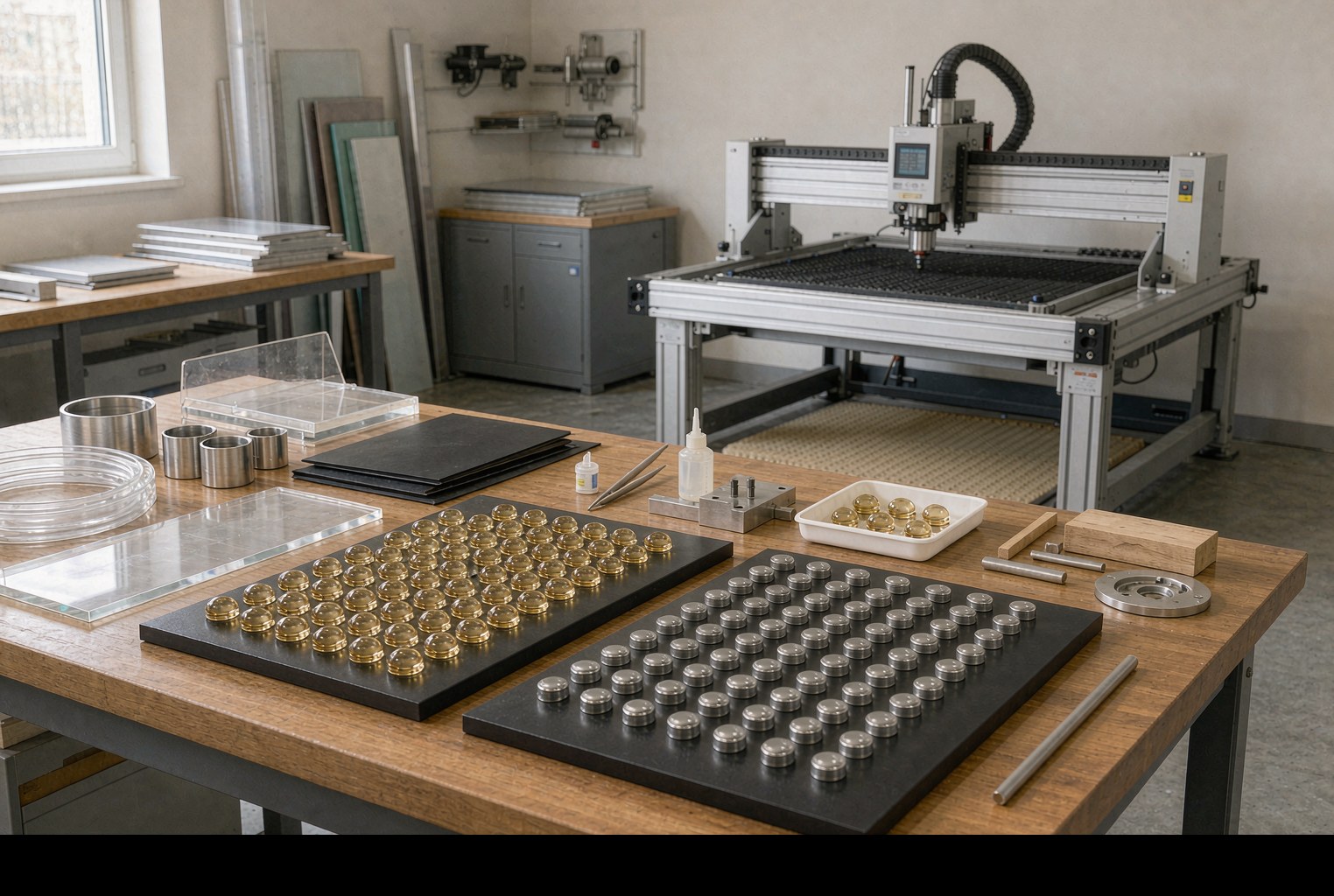
Inside the 5,000 m² Guangzhou Facility
Our production base is also our registered office, which matters more than it sounds. Engineers, estimators and fabricators work within a few metres of each other, so a change to a mounting detail is discussed with the person holding the laser cutting file rather than passed through three layers of email. The facility is equipped with fiber laser cutters, high-precision CNC routers, automated grooving machines, clean paint booths, certified welding stations and an automated LED testing lab, giving us precision down to ±0.1 mm for complex shapes.
Full in-house production also means full in-house accountability. Our quality system is aligned with CE, UL and ISO requirements, and the process is documented as six steps: consultation, planning, design and engineering, fabrication, quality control, and delivery and packaging. Project teams can see exactly where a sign sits in that sequence at any point, and every stage has a defined output before the next one begins.
From DWG Files to Approved Shop Drawings
Projects usually start with the architect’s DWG, DXF or PDF drawings, or with reference photographs when as-built information is incomplete. Our first deliverable is not a quotation but a set of CAD shop drawings: sign schedules, elevations, fixing details, structural calculations and 3D renderings where the spatial relationship needs to be understood. Alongside them we return material and finish samples, plus a fixed quotation based on the approved scope.
This is also where the schedule is fixed. Standard lead time is 10–25 working days after drawing approval, depending on the number of sign types and the finishes chosen. Because approval is a hard gate, pushing decisions on colour, illumination temperature or mounting method into production is the one thing we ask clients to avoid. For multi-building packages we schedule fabrication in phases, so early buildings ship first while later phases are still in engineering.
Fabrication, Finishing and 48-Hour LED Burn-In
Once shop drawings are signed off, fiber laser cutting and CNC routing establish the geometry, automated grooving prepares folded metalwork, and welding and assembly bring each unit together in-house. Coating happens in dust-free paint booths using automotive-grade processes, because outdoor monument signs and illuminated channel letters are judged years later by how evenly their finish has aged, not by how they looked on the day they left the factory.
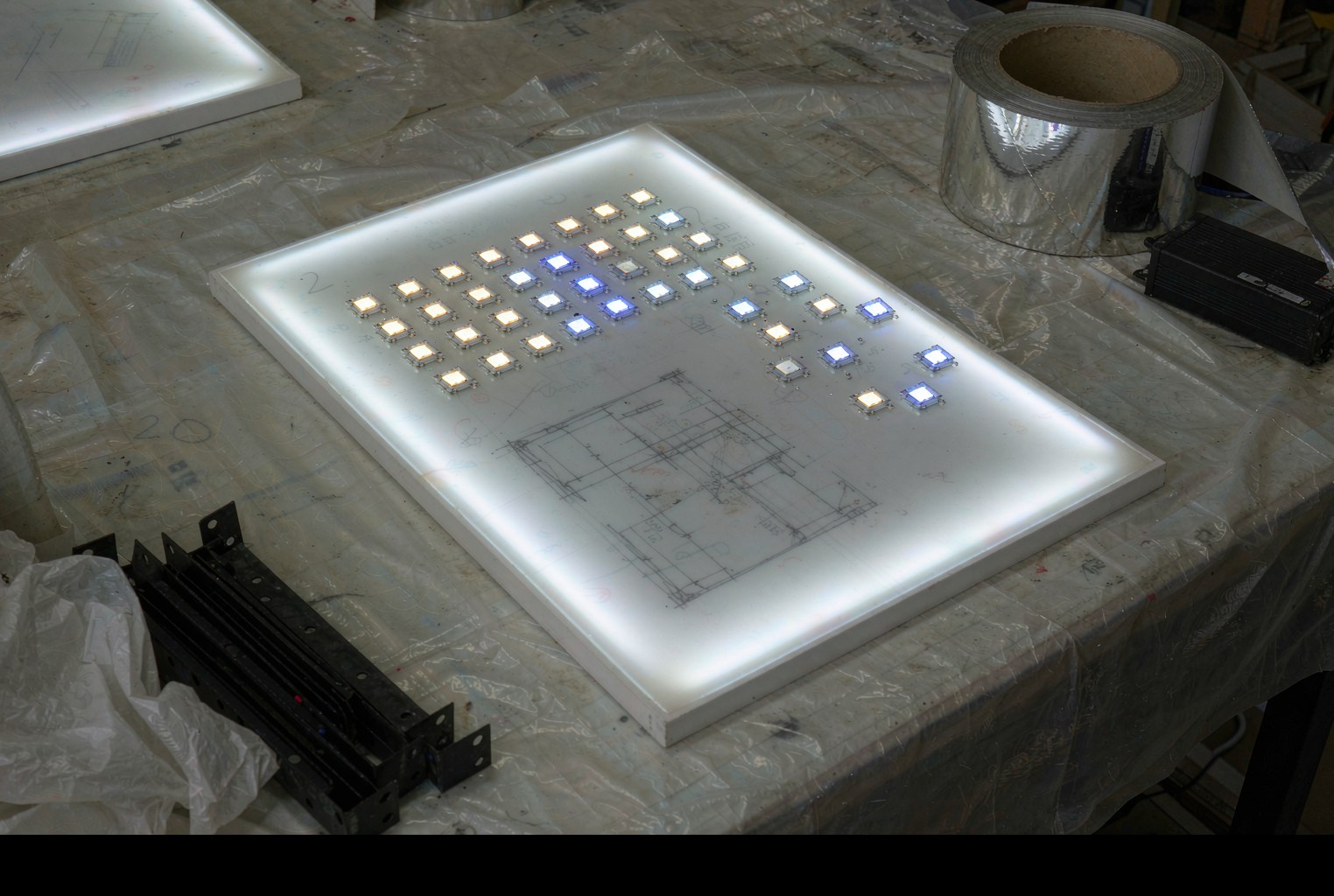
Quality control is deliberately layered rather than left to a final inspection: incoming material inspection, in-process dimensional checks, a 48-hour continuous LED burn-in, finish colour verification under daylight and D65 lamps, waterproof testing, and finally a pre-shipment packing and photo report that is sent to the client before the crates move. Illumination is tested as a system, so a halo-lit letter set is checked for consistency across the whole word rather than as individual characters.
Wayfinding Systems: Planning Before Fabrication
The most expensive mistakes in signage are made before any metal is cut. A wayfinding system is an information hierarchy: which decision a visitor faces at each junction, what they need to know at that moment, and nothing more. Our planning stage maps decision points, assigns a sign type to each one, and builds a naming and numbering logic that survives future tenant changes. Directory content, arrow conventions and typography are then fixed into a master plan that fabrication follows literally.
Accessibility is part of that plan, not an afterthought. Our wayfinding packages include ADA-compliant directories and tactile or high-contrast elements where a project requires them, coordinated with the same material palette as the rest of the sign family. Public cultural buildings put this logic under the most pressure: dense visitor flows, intersecting routes, and little tolerance for ambiguous direction. Our 2024 upgrade of the Baoan 1990 Cultural Complex wayfinding system — covering the library, cultural hall and concert hall — combined exterior directional mapping, interior floor guides, luminous letters for the concert hall and night-time illuminated directories. It remains a useful reference for how a wayfinding systems package is planned as one system rather than a list of signs.
Monument Signs and Illuminated Channel Letters
Freestanding landmarks are structural projects. A monument sign has to be engineered for its foundation, wind load, drainage and service access, while still reading as a clean architectural object at both 3 metres and 30 metres. We build these in SS304 and acrylic with IP65-rated assemblies, and coordinate the structural interface with the project’s civil drawings before fabrication starts, so anchorage and conduit positions are not discovered on site.
Illuminated channel letters introduce a different set of constraints: letter depth against viewing distance, halo spacing against wall finish, front-lit acrylic diffusion against brand colour, and rooftop fixing against structural limits. Because our LED assembly and testing lab are in the same facility, samples can be produced for material, colour and lighting approval before a full run, and every illuminated set goes through the same 48-hour burn-in. That combination — engineering plus sample approval plus endurance testing — is what keeps a logo looking identical across a facade, a lobby wall and a rooftop sign.
Export-Ready: From Our Factory to 30+ Countries
Overseas projects fail at the packaging stage surprisingly often. A perfectly fabricated sign that arrives with an unlabelled crate, no fixing schedule and no correspondence between parts and drawings can cost days of site labour. Our export procedure is built to prevent that. Every unit is wrapped in foam protection, packed in fumigation-free plywood crates, and recorded in an itemised packing list that maps each crate to its sign ID, fixing hardware and installation drawing. Crates are numbered to follow the installation sequence, and the pre-shipment photo report gives the receiving team a visual reference before the container is opened.
We ship through Shenzhen and Guangzhou ports by sea or air, with export documentation prepared alongside the packing list. Clients in more than 30 countries receive the same package structure regardless of destination, and phased shipping lets a general contractor install completed buildings while the remaining phases are still in production. Combined with the 10–25 working day lead time after drawing approval, this is why an architectural signage manufacturer with its own export workflow is usually easier to schedule than a chain of separate suppliers.
Why Buyers Choose Custom Signage China for Full Packages
There is a practical reason project teams consolidate a signage package with one factory. Consistency is easier to enforce when the same engineering team owns the shop drawings, the same paint booth finishes every family, and the same QC report covers the entire shipment. It also removes the familiar gap between a design intent and what a fabricator can actually build, because our engineers raise constructability questions while the drawings are still editable.
Commercial terms are kept equally simple. The minimum order is one project set, and we produce single sample signs for material, colour and lighting approval before mass production. Direct factory pricing and an optimised local supply chain keep costs predictable without pushing fabrication out to subcontractors. Our published partner list includes developers, technology groups and public operators such as Vanke, China Resources, Huawei, TCL Group, OCT Group, China Railway, CSCEC, Ping An, Shenzhen Metro, China Merchants, Gemdale and Shum Yip — clients whose review processes tend to demand exactly the documentation described above. It is the same discipline behind our corporate mission, Building Masterpieces · Harmonizing Spaces, and our vision of a global benchmark in architectural signage.
Frequently Asked Questions
Can you work from our architect’s drawings?
Yes. Send DWG, DXF or PDF drawings, or reference photos if as-built drawings are not available. Our engineers return CAD shop drawings, material and finish samples, and a fixed quotation for approval.
How long does production take?
Standard lead time is 10–25 working days after drawing approval, depending on scope and finish. Multi-building wayfinding packages are scheduled in phases so early buildings ship first.
Do you ship worldwide, and how is everything packed?
We export to more than 30 countries through Shenzhen and Guangzhou ports. Shipments use fumigation-free plywood crates with foam protection, itemised packing lists, numbered crates matched to installation drawings, and a pre-shipment packing and photo report.
What is the minimum order quantity?
One project set. We also produce single sample signs so material, colour and lighting can be approved before the full production run begins.
Work With Our Team
If you are preparing a signage package and want an early review of constructability, send your drawings and a target programme to our project team at [email protected] or +86 135 2767 8848. We will return shop drawings, samples and a fixed quotation, and indicate which phases can ship first. You can also browse our solutions overview or the rest of our news and insights for more detail on individual systems.
For teams comparing suppliers, the useful test is not the catalogue. It is whether the architectural signage manufacturer can show you the drawing approval gate, the QC record and the packing list that will accompany your own project. Our Guangzhou facility is open to that conversation at any stage of design.







