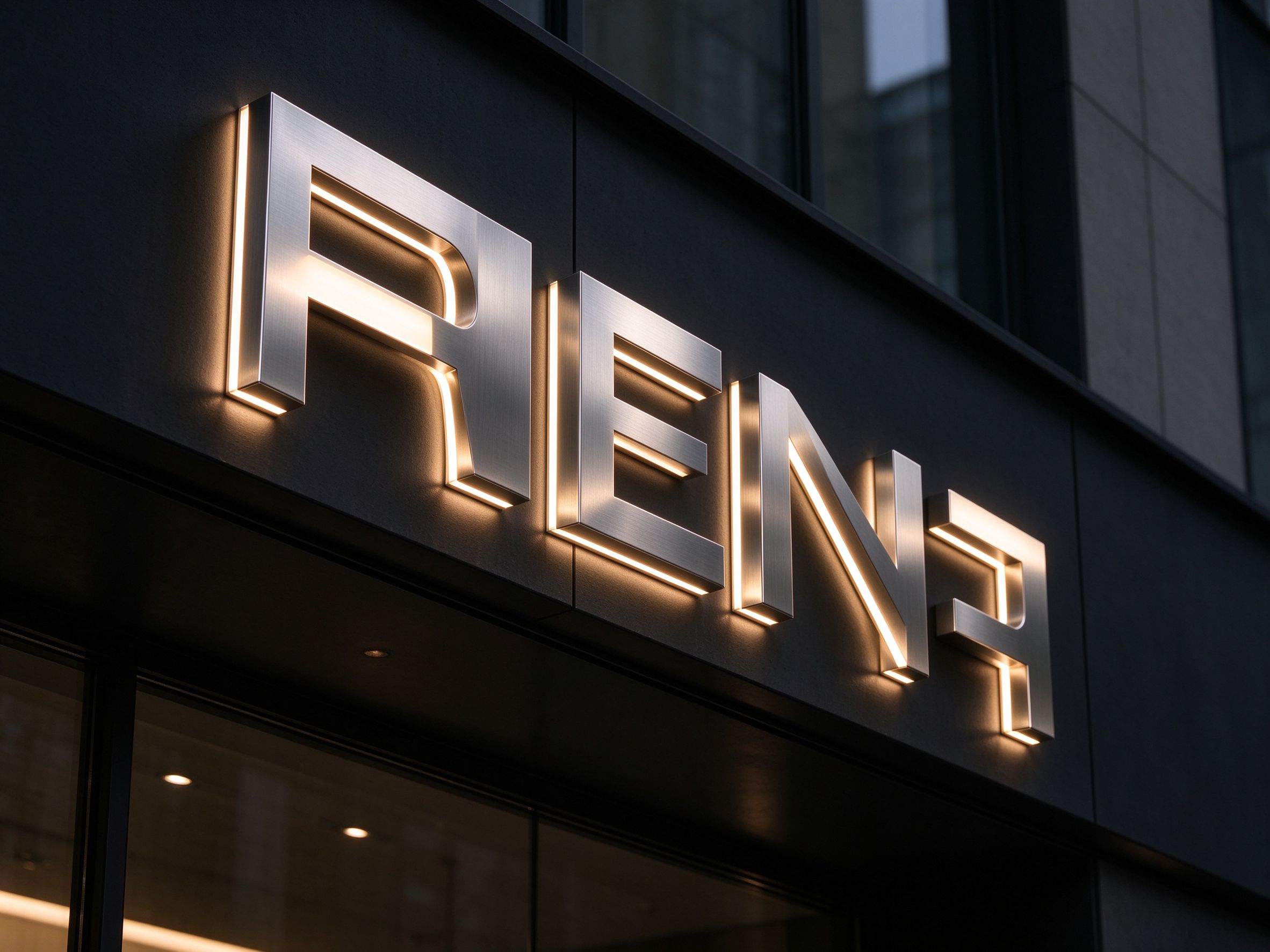
Choosing between acrylic vs polycarbonate sign faces is one of the first material decisions in any illuminated letter or light box, and it shapes brightness, impact resistance, and how the sign ages outdoors. Acrylic, or PMMA, is the default for most lit faces because it transmits light cleanly and holds color well. Polycarbonate, or PC, is far tougher and resists impact that would crack acrylic, but it needs the right grade to survive the sun. This guide compares both as illuminated sign face materials, and shows when each is the better call for a custom fabrication.
How the two materials behave in light
Acrylic is optically clear and transmits up to about 92 percent of visible light in its clear form, which is why it gives crisp, bright illumination and accurate brand color. It diffuses LED points into an even glow and takes second-surface printing with sharp depth. Polycarbonate transmits well too, typically in the mid-to-high 80s percent range, but standard grades can read slightly less clear and may show a faint warm tint. For a color-critical retail face where the exact hue matters, acrylic usually wins on optics.
The trade everyone weighs is impact. Polycarbonate is many times more resistant to breakage than acrylic and flexes instead of shattering under a hard hit. Acrylic is rigid and attractive but can crack if struck or if fastened under stress. So the question is rarely which material is better in the abstract, and more often which failure mode worries you more: a dull or scratched face, or a cracked one. Temperature matters too. Acrylic can turn brittle in extreme cold and crack, while polycarbonate stays flexible down to well below freezing, which is why cold-climate or hail-prone sites sometimes lean toward the tougher resin even when optics favor acrylic.
Weatherability and the UV question
Outdoors, the deciding factor is often the sun. Acrylic has naturally strong UV resistance and keeps its clarity and color through years of direct light without an added coating, which is why it is a common choice for long-term building identification. Polycarbonate is highly weatherable only when it is supplied as a UV-stabilized grade, usually with a co-extruded protective cap. Specified as bare commodity sheet, polycarbonate can yellow and lose surface quality under the same sun that leaves acrylic unchanged.
For this reason the safe rule is simple. Use sign-grade UV stabilized acrylic for most outdoor lit faces, and if you choose polycarbonate sign panel material for impact, require the UV-stabilized grade with a stated exterior service life. A solution scoped for a coastal or high-traffic site should name the exact grade, not just the resin family, because the grade is what determines how the face looks in year five.
| Property | Acrylic (PMMA) | Polycarbonate (PC) |
|---|---|---|
| Light transmission | Up to ~92 percent | ~86 to 90 percent |
| Impact resistance | Good, can crack if hit | Very high, flexes |
| UV and color stability | Naturally strong | Needs UV-stabilized grade |
| Scratch resistance | Harder surface | Scratches more easily |
| Fabrication | Laser or CNC, polishable | CNC route, avoid laser |
| Typical cost | Lower | Higher |
Fabrication and installation differences
The two materials are cut and formed differently, and that affects shop practice and lead time. Acrylic cuts cleanly with a CNC router or a CO2 laser and can be polished to a high gloss, which makes intricate faces and flame-polished edges efficient. Polycarbonate is usually CNC routed or saw cut; laser cutting can discolor the edge and release hazardous fumes, so it is generally avoided. Polycarbonate also needs careful drying and temperature control when thermoformed, while acrylic forms more readily for curved or embossed faces.
Both plastics expand and contract with temperature, so either face needs slotted holes, adequate clearance, and supportive framing so fasteners do not induce stress cracks. Acrylic is more rigid and holds a flat plane in small and medium letters without extra support. Polycarbonate is more flexible and forgiving in handling, which is why it is often favored for large letters that will be shipped and handled repeatedly, including export crates that move through temperature swings on the way to another country.
Surface care differs as well. Acrylic has the harder surface and resists light scratching better during routine cleaning, so it keeps its gloss in reception and retail settings with simple non-abrasive care. Polycarbonate scratches more easily unless it carries a hard coat, so high-touch or public panels should specify that coating or accept more frequent attention. Either way, mild cleaners and soft cloths beat ammonia-based products, which can damage plastic sign materials over time.
When to choose each for your sign
Choose an acrylic sign face when the sign is above normal reach, brightness and accurate brand color matter, long-term outdoor clarity is a priority, and cost efficiency counts. That covers most standard front-lit channel letters, retail fascia, and reception signs viewed up close. Choose a polycarbonate sign panel when the face sits near ground level, vandalism or accidental impact is a concern, the location sees hail or severe weather, or the faces may flex during transport and installation. In those cases the impact resistance outweighs the slightly lower optical clarity and the higher price.
For an illuminated sign face material decision on a multi-site program, the pattern often repeats: acrylic for protected, color-critical faces, and UV-stabilized polycarbonate for exposed or high-traffic ones. Matching the material to the exposure, rather than using one resin everywhere, keeps the whole program looking right and staying safe.
A practical way to decide is to rank the site by risk. First, how close is the face to ground level or public contact, where impact and vandalism live. Second, how strong is the sun and salt exposure, where UV stability decides the five-year look. Third, how large and shippable is the letter, where flex and handling favor polycarbonate. Fourth, how strict is the brand color, where acrylic’s optics win. The site that scores high on impact and shipping but low on color-critical closeness is the natural polycarbonate candidate, and the reverse points to acrylic.
How Duoyuan specifies sign faces
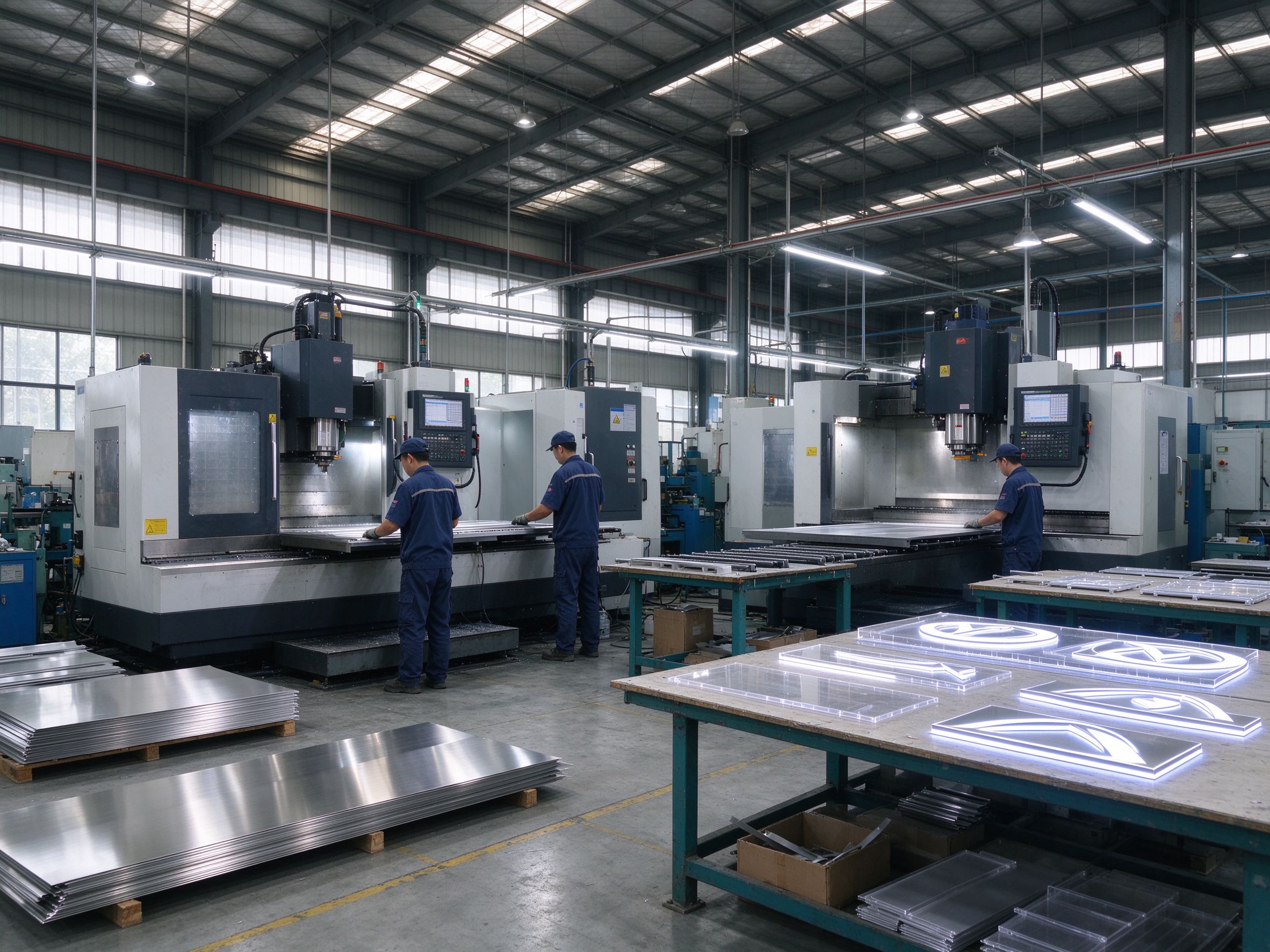
Duoyuan Advertising builds architectural signage in a 5,000-plus square meter factory in Guangzhou and exports to more than 30 countries, so its face material choices have to perform from temperate inland sites to humid coastlines. The one-stop model covers design, custom fabrication, and installation, which means the face material is chosen against the actual mounting height, exposure, and shipping route rather than defaulted. Outdoor products are built to IP65 as standard, and every LED unit passes a 48-hour aging test before shipment, with production under ISO 9001 process controls and CE and UL awareness where required.
Lead time runs 10 to 25 working days, enough to select the correct grade, cut and form the faces cleanly, and verify the result before it leaves the factory. Whether the job calls for a crisp acrylic face or a tougher UV-stabilized polycarbonate panel, the team can document the choice so the installed sign matches the approved sample.
Frequently asked questions
Which is brighter, acrylic or polycarbonate?
Acrylic transmits more visible light, up to about 92 percent, so it generally gives a brighter, more color-accurate face than polycarbonate.
Can polycarbonate be used outdoors safely?
Yes, but only as a UV-stabilized grade. Bare polycarbonate can yellow in the sun, while the stabilized sheet is built for exterior service.
Why avoid laser cutting polycarbonate?
Laser heat can discolor the edge and release hazardous fumes. CNC routing or saw cutting gives a cleaner, safer result.
Is acrylic strong enough for exterior signs?
For faces above normal reach and standard weather, yes. Where impact or vandalism is the risk, UV-stabilized polycarbonate is the safer pick.
Does the face material affect LED spacing?
It does. Diffusion and thickness change how evenly light spreads, so LED layout and face material should be specified together for an even glow.
How do I choose for a multi-site program?
Match material to each site’s exposure: acrylic for protected, color-critical faces, polycarbonate for low, exposed, or high-traffic ones.
If you are deciding on a face material for a new sign or a rollout, start a custom quote and let the team match the grade to your site. You can review past projects, read the FAQ, or reach Duoyuan at [email protected] and on WhatsApp or WeChat at +86 135 2767 8848 (Pan Jie).