When a storefront has to read clearly at noon and still glow after dark, dual-lit channel letters are often the specification that solves both problems in a single build. Rather than relying on one light source, this construction drives illumination in two directions: out through the face and back toward the wall behind each letter. The result is a crisp daytime identity paired with a soft backlit halo effect that keeps the shape legible from down the street. Buyers comparing front and halo lit signs frequently discover that one carefully engineered sign can replace what they assumed would require two separate fixtures.
The idea is straightforward, but the execution rewards planning. A dual-lit letter is still a channel letter at heart, formed metal shell, face, and LEDs inside, with an added optical path so light escapes from the rear as well as the front. That change touches material selection, mounting hardware, power budgeting, and even the condition of the wall the sign hangs on. This guide explains how the two lighting modes interact, how the construction differs from front-only or halo-only alternatives, and how to decide which configuration suits a particular facade.
How dual-lit channel letters produce two kinds of light
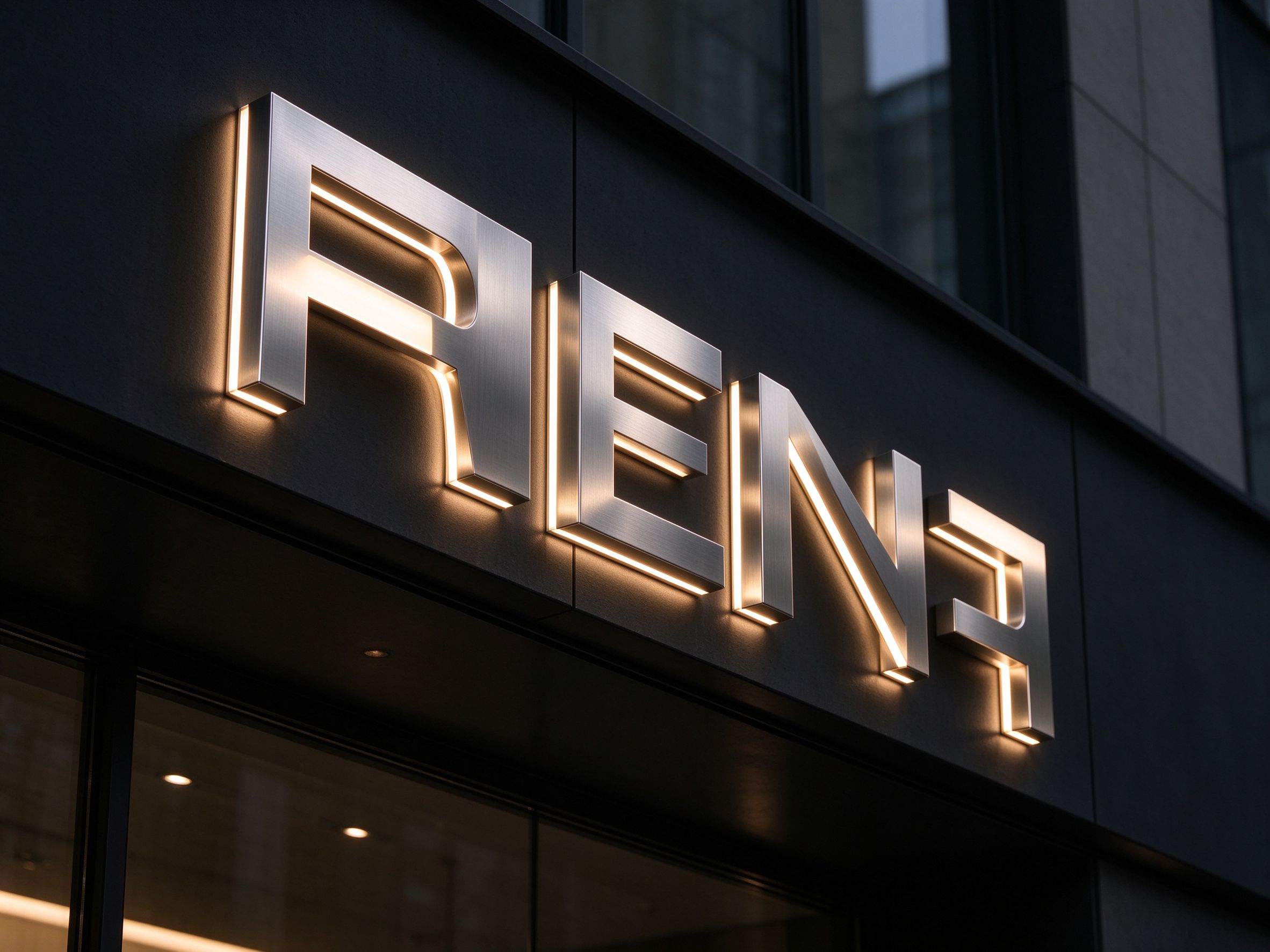
Inside a dual-lit letter, LEDs are mounted so that one set aims forward and another aims backward. The forward set lights the face from behind, turning the letter into a bright, even graphic during the day and after sunset. The rear set washes the mounting surface, creating the backlit halo effect that outlines each character against the wall. Because the two paths are independent, a fabricator can balance them: brighter face output where ambient contrast is poor, stronger rear output where the wall is dark and absorptive.
The face itself matters. An acrylic face diffuses the forward LEDs into a smooth, even field without visible hot spots, which is what makes the letter look like a solid glow rather than a row of dots. Opal or milk-white acrylic is common because it spreads light widely; colored acrylic shifts the emitted hue and reduces output, so designers account for that loss. The rear path, by contrast, depends on standoff distance. Letters mounted flush to a wall produce almost no halo, while letters held off the surface let light spill around the edges and paint a soft outline.
Controlling the two paths separately is a frequent source of regret when it is skipped. If the face and rear share a single driver channel, dimming one dims both, and the balance that looked good in the workshop may fail against a real facade. Specifying separate channels, or at least separately addressable outputs, lets an installer tune day and night legibility on site after the letters are mounted and the surrounding light is understood.
Comparing dual-lit channel letters with front-only and halo-only builds
Front-only letters put every LED behind the face. They deliver maximum face brightness and the cleanest daytime read, but they throw no light onto the wall, so at night the letter can look like a floating bright shape with a dark gap around it. Halo-only letters, sometimes called backlit or reverse-lit builds, hide the LEDs at the rear; the face stays dark and the glow comes entirely from the wall. Each serves a purpose, but neither alone guarantees strong performance across both day and night conditions.
Dual-lit construction combines the two, and the trade-offs are worth stating plainly. The table below compares the three approaches on the criteria buyers most often ask about.
| Criterion | Dual-lit | Front-only | Halo-only |
|---|---|---|---|
| Daytime legibility | Strong, bright face | Strongest face | Weak, dark face |
| Night presence | Face plus wall glow | Bright face, flat surround | Soft outline only |
| Backlit halo effect | Present and tunable | None | Present, sole source |
| Typical use | Premium storefronts and brands | High-contrast retail | Subtle architectural settings |
Read the table as a starting point rather than a verdict. A well-executed front-only sign on a dark wall can outperform a poorly spaced dual-lit one, and a halo-only build is genuinely elegant where a restrained look is the goal. The value of dual-lit channel letters is flexibility: one sign that reads as a clean graphic by day and a glowing silhouette by night. That flexibility is why the phrase front and halo lit signs appears so often in briefs for flagship retail and hospitality locations where the facade carries as much weight as the logo.
Specifying dual-lit channel letters for a real facade
Three choices do most of the work: the face material, the LED module layout, and the mounting geometry. The acrylic face should be specified for both diffusion and color stability. Thin or uneven sheet can reveal the outline of individual modules, while a properly diffused grade evens the field. Where brand color is critical, ask how the color is achieved, because a tinted film over a white diffuser behaves differently from a colored casting under the same LEDs.
The LED module layout determines whether the face is uniformly bright and whether the halo is continuous. Modules spaced too widely create scalloped light on the wall and bright bands on the face; spacing them too tightly wastes power and can generate heat that shortens component life. A considered layout follows the geometry of the letter, tighter on curves and returns, wider on long straight strokes, and keeps the two paths electrically separate so each can be tuned. Ask the fabricator to describe the layout in terms of module pitch and drive current rather than a vague promise about brightness.
Mounting geometry is the quiet variable behind the backlit halo effect. Standoffs set the gap between letter and wall; too small and the halo collapses, too large and the glow spreads into a fuzzy blob. Wall color and texture matter just as much. A light, matte surface reflects a clean halo, while dark or glossy surfaces absorb or scatter it. Because these factors cannot be fully judged in a workshop, plan for on-site adjustment during commissioning and confirm in the contract who is responsible for that visit.
Where signage accessibility is relevant, such as at public-facing entrances, discuss readable contrast and placement early. Illumination improves visibility but does not replace good letterform, spacing, and placement decisions. Keeping day and night legibility in mind from the drawing stage avoids expensive changes once the letters are formed and the wall fixing is committed.
Installation, power, and long-term service
A dual-lit sign carries two lighting loads, so power budgeting deserves attention early. Confirm the total draw, the driver locations, and how the two channels will be switched. Many owners run the face during business hours and add the halo in the evening, which means the control strategy should be drawn before cables are hidden. Drivers should sit where they can be reached without dismantling the letter, and cable runs should be planned so voltage drop does not dim the far end of a long sign.
Serviceability is another practical difference. A front-only letter can often be serviced by opening the face; a dual-lit letter adds rear components and wiring that may require access from behind the sign. Ask how a failed module is replaced and whether the wall fixing allows the letter to be removed cleanly. A sign that looks perfect but cannot be maintained cheaply becomes expensive over its working life.
For buyers weighing front and halo lit signs against simpler alternatives, the decision usually comes down to how much the wall itself contributes to the brand. When the wall is part of the visual story, the rear glow is an asset; when it is plain or difficult, a front-led design may deliver more impact per watt. Either way, request a written specification that states the acrylic face grade, the LED module layout, the number of lighting channels, and the service access method, so competing quotes can be compared on equal terms rather than on impressions.
Questions buyers often ask
Do dual-lit channel letters cost more than front-only signs?
Usually yes, because they need a second LED path, more wiring, and often an extra driver channel. The premium buys flexibility and a layered night appearance. Whether it is worth it depends on how much the wall glow contributes to the location visibility and brand character.
Can the face and halo be dimmed independently?
Only if the specification calls for separate channels or separately addressable outputs. Ask for this in writing and confirm how the controls will be wired, since a single shared driver will force both paths to change together and may limit day and night legibility after installation.
Will the backlit halo effect work on any wall?
No. Standoff distance, wall color, and surface texture all matter. Light matte surfaces return a clean halo; very dark or glossy walls can absorb or scatter it. A sample or mock-up on the actual wall is the most reliable way to judge the outcome before committing to fabrication.
Does an acrylic face fade or yellow over time?
Quality cast acrylic resists yellowing well, but cheaper sheets and applied films can discolor under constant LED exposure and sunlight. Specify a UV-stable material and ask for the grade, especially when brand color accuracy matters to the identity.
How does LED module layout affect maintenance?
A considered layout leaves room to reach and replace individual modules and keeps heat manageable. Dense glued-in arrangements can turn a single failed diode into a full-face rebuild, so ask how modules are fixed and what access is provided from the front and the rear.
Are dual-lit channel letters right for every storefront?
Not every facade benefits. Where the wall is visually busy or the sign sits far from viewers, a simpler front-only build can be clearer. Choose dual-lit channel letters when the combination of a bright graphic and a controlled halo genuinely improves the site, and verify the plan with the installer before fabrication begins.
Choosing between lighting strategies is easier with a clear specification and an experienced partner. Our team designs, fabricates, and installs illuminated letters as part of a one-stop service, and we can help you compare front and halo lit signs for your facade. Explore our illuminated letters and related signage solutions, review our fabrication capabilities, or talk to our team about your site.