A museum visit is a sequence of small decisions made under distraction. People arrive with a ticket, a coat and a rough idea of what they came to see, then immediately have to choose a direction. Good museum wayfinding resolves that choice in a second or two and then steps out of the way, because the moment a sign starts competing with the artwork it has failed at its job. The best systems feel less like signage and more like a well-managed building.
Getting that balance right is harder than it sounds. Galleries change exhibitions, objects move, and a single room may serve a permanent collection in the morning and a touring show in the afternoon. The signage has to keep up without making the space feel like a temporary construction site. That means thinking about visitor flow, sightlines and the rhythm of a visit before anyone talks about materials, finishes or mounting hardware.
Design museum wayfinding around the first ten minutes
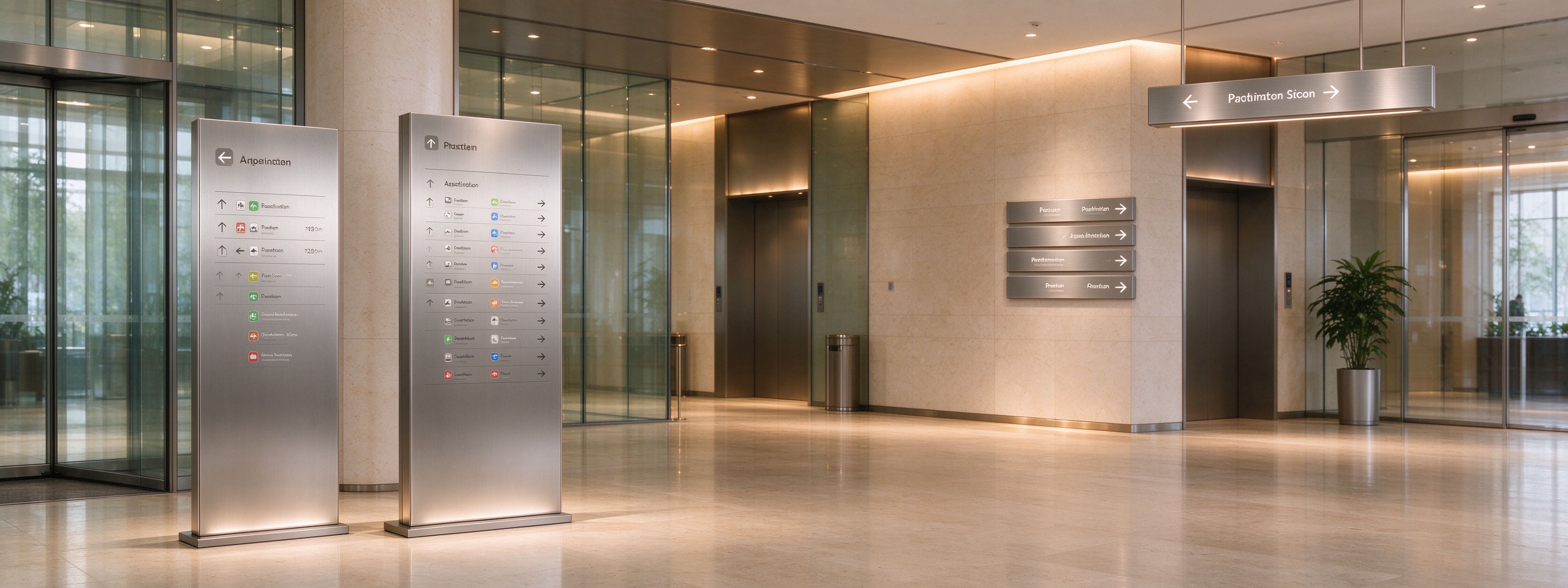
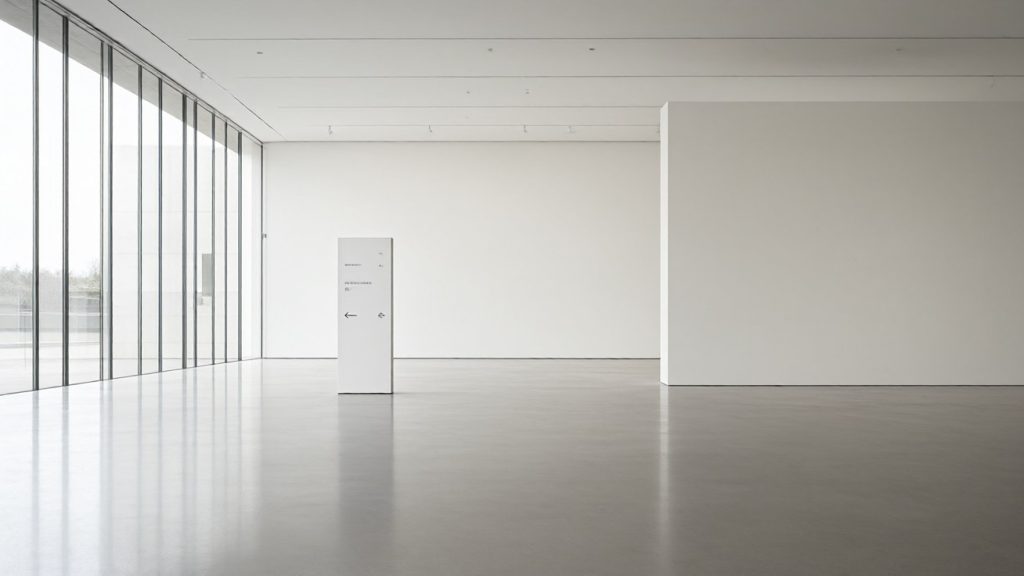
Arrival sets the tone. Visitors stepping out of a busy street into a quiet atrium need one clear overview that tells them where the entrance, ticketing, cloakroom and main galleries sit. Give that information at a single decision point rather than scattering it across several small signs. Once someone has chosen a direction, the environment itself should carry them forward with architecture, light and floor changes, and signage should only reappear at the next genuine choice.
Study visitor flow before drawing anything. Stand near the entrance and watch where people bunch up, where they turn back, and which doorway they assume is the exit. Those behaviours reveal the questions the building is failing to answer. Put a sign at each hesitation point and resist the urge to add more. In a gallery context, an unanswered question usually sends someone back to the desk, which interrupts both the visit and the staff.
Talk to front-of-house teams as well as curators. Front-of-house staff hear the real questions visitors ask, while curators know which rooms are likely to change and which objects must never be obscured. Combining those two perspectives turns a vague brief into a practical schedule of locations, messages and sign types, and it stops a beautiful scheme from being undone by one badly placed plate.
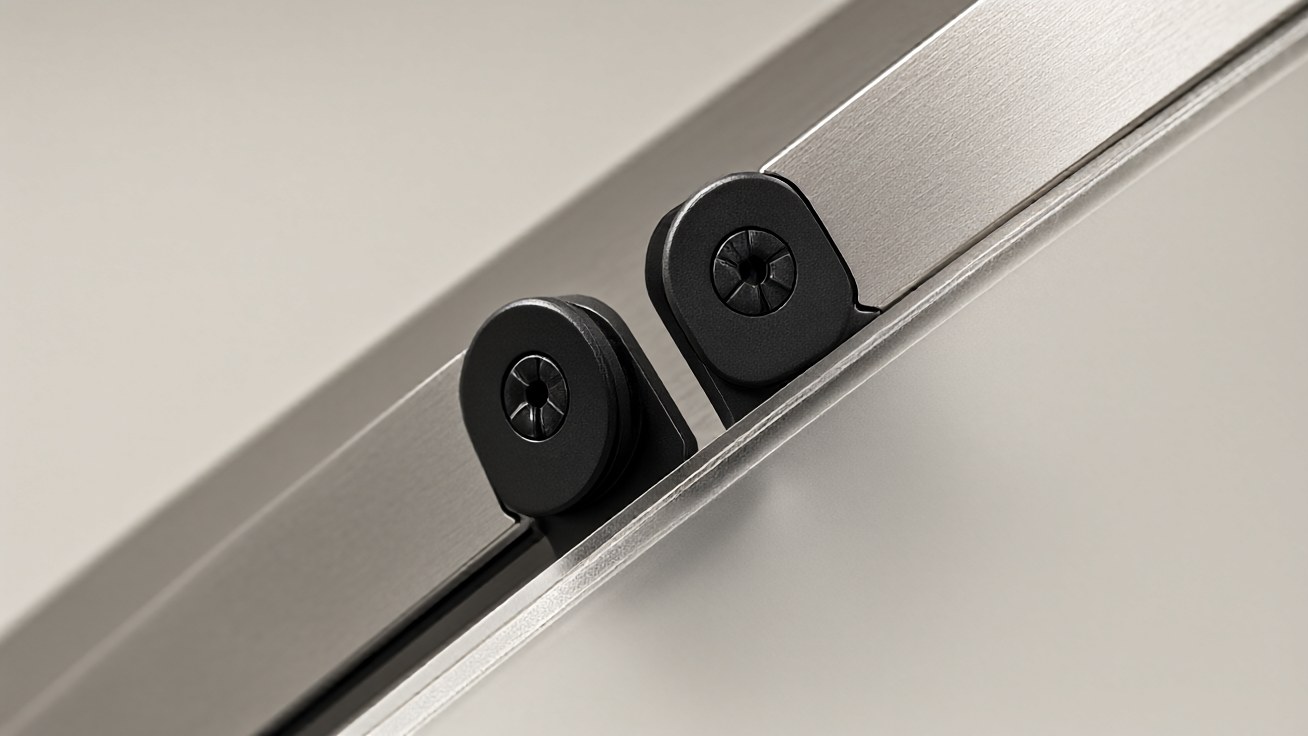
Where museum wayfinding meets gallery signage and collection labels
Not all signs do the same job. A useful way to structure the system is to separate orientation, room identification and interpretation. Orientation tells someone which wing or floor to head for. Identification confirms they have reached the right room. Interpretation, including object captions, explains what is in front of them. Keeping these layers distinct prevents a single sign from trying to say too much at once.
| Element | Main purpose | Typical position | How often it changes |
|---|---|---|---|
| Entry directory | Orientation across floors and wings | Lobby, facing arrival | Rarely, with layout changes |
| Gallery signage | Room names and thematic zones | At thresholds and junctions | With exhibition changes |
| Exhibition graphics | Introduce a temporary show | Entrance to the exhibition | Each new exhibition |
| Collection labels | Identify individual objects | Near or beside the object | When displays are rotated |
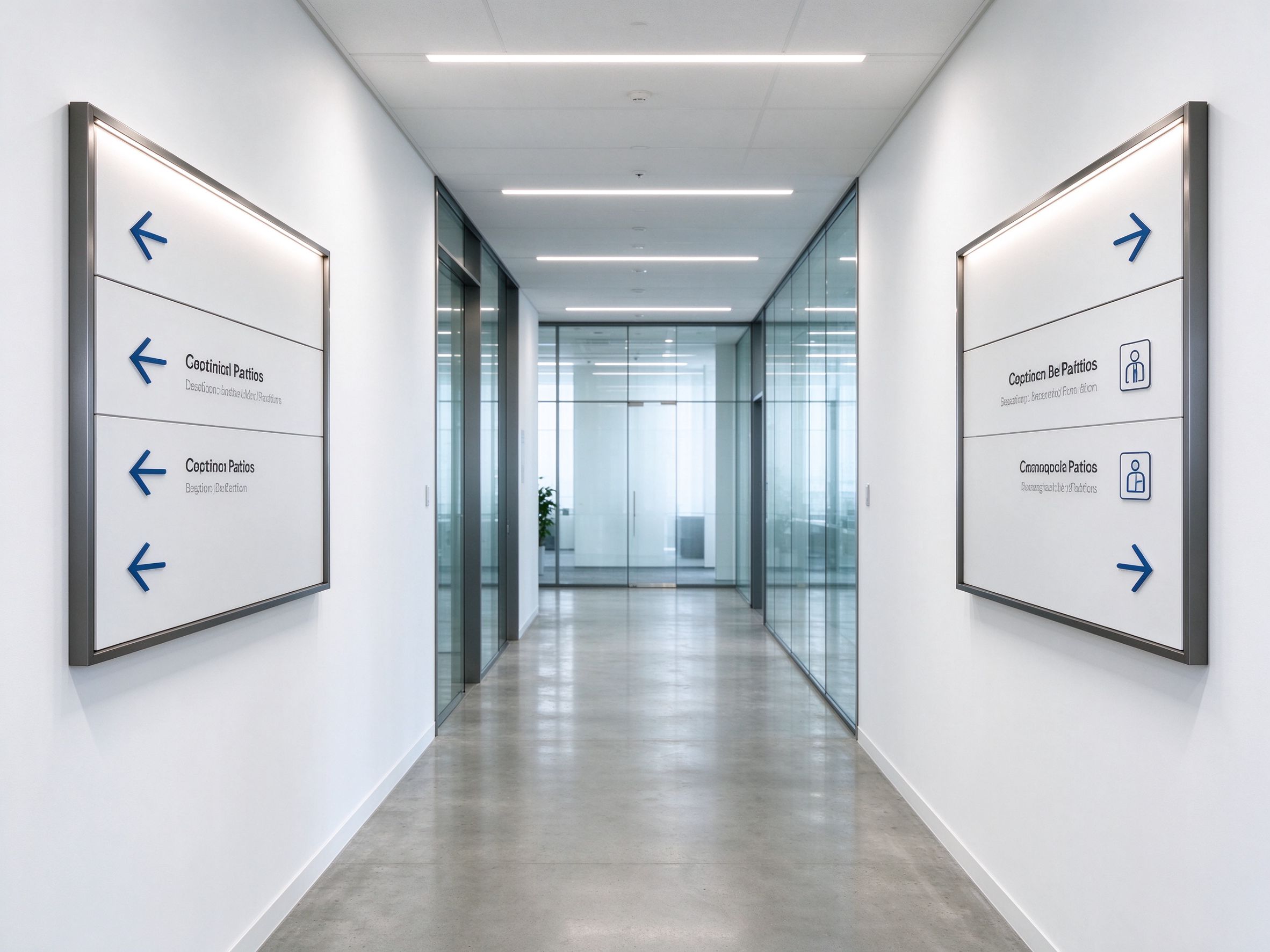
The difference between permanent and temporary elements matters in practice. Gallery signage that stays in place for years should be built as part of the architecture, with materials chosen for longevity and easy cleaning. Exhibition graphics, by contrast, need to go up and come down quickly. Designing both within one typographic system lets a museum swap a show without making the whole building look inconsistent.
Collection labels deserve particular care because they sit closest to the work. Keep them small, well spaced and visually quiet, and agree their position with the curatorial team so they never cover a significant part of an object. Low-glare finishes help visitors read text without reflecting spotlights back into the room. Where loans require reversible fixing, plan the mounting method with the conservator rather than choosing an adhesive on site.
Temporary signs that respect the permanent scheme
Touring exhibitions are the real test of a wayfinding system. Temporary signs have to be unmistakably current, but they should still speak the same visual language as the permanent signs around them. Reusing the arrows, type scale and colour rules of the main scheme is usually enough to achieve this. What changes is the message and the lifespan, not the grammar.
Plan the wording and approval route early. Exhibition titles, sponsor lines and object credits often arrive late and go through several reviews, so build a realistic approval window into the programme and leave a little slack for final edits. Agreeing a single owner for sign-off prevents the common problem of six people each changing one line at the last minute.
Accessibility belongs in this layer too. Temporary signs should use the same contrast rules, readable heights and plain language as permanent ones, with large-print or tactile options where the venue provides them. Because a touring show can draw unfamiliar visitors, clear exit and toilet information near the exhibition entrance reduces the number of people wandering through galleries looking for a way out.
The final piece is a simple record of what was installed and where. A shared plan showing every permanent sign, every insert location and the owner of each temporary graphic makes the difference between a scheme that lasts and one that drifts. When a curator changes a room the following year, that record tells the team which panel can be reused and which wording needs approval. It also helps when a venue moves from one exhibition supplier to another, because the new team can read the rules instead of guessing from what happens to be on the wall. Keep the record short and store it where both facilities and curatorial staff can reach it.
Questions buyers often ask
What does a complete museum wayfinding project include?
It normally covers an entry directory, directional signs at main junctions, room identification, and a framework for show graphics and object labels. The exact scope depends on the number of floors and how frequently the displays change. A schedule that records every location and who owns its content is the most reliable way to keep the project manageable.
How can signs avoid distracting from the artwork?
Use a restrained palette, matte finishes and a consistent type size, and place signs at thresholds rather than in the middle of a viewing area. The aim is for visitors to find information with a glance and then forget about it. Good museum wayfinding is measured by how rarely people need to stop and study a sign.
What is the role of exhibition graphics during a touring show?
Exhibition graphics introduce the show, set its tone and carry essential information such as dates, credits and sponsored messages. They should be clearly current but still related to the permanent sign system, so the building does not feel visually fragmented when a new exhibition arrives.
How do you manage visitor flow at busy moments?
Identify where queues form and place directional information before those points rather than inside them. Clear sightlines to exits and adjacent galleries stop crowds stacking in one spot. Planning for the busiest hour, not the quietest weekday, keeps the system working when it matters most.
Can collection labels be changed without rebuilding the display?
Yes, if they are specified as part of a modular system from the start. Holders with replaceable text let curators rotate objects and update wording without new fabrication. Agreeing the format and fixings early is far cheaper than adapting labels one by one later.
How long does custom fabrication usually take?
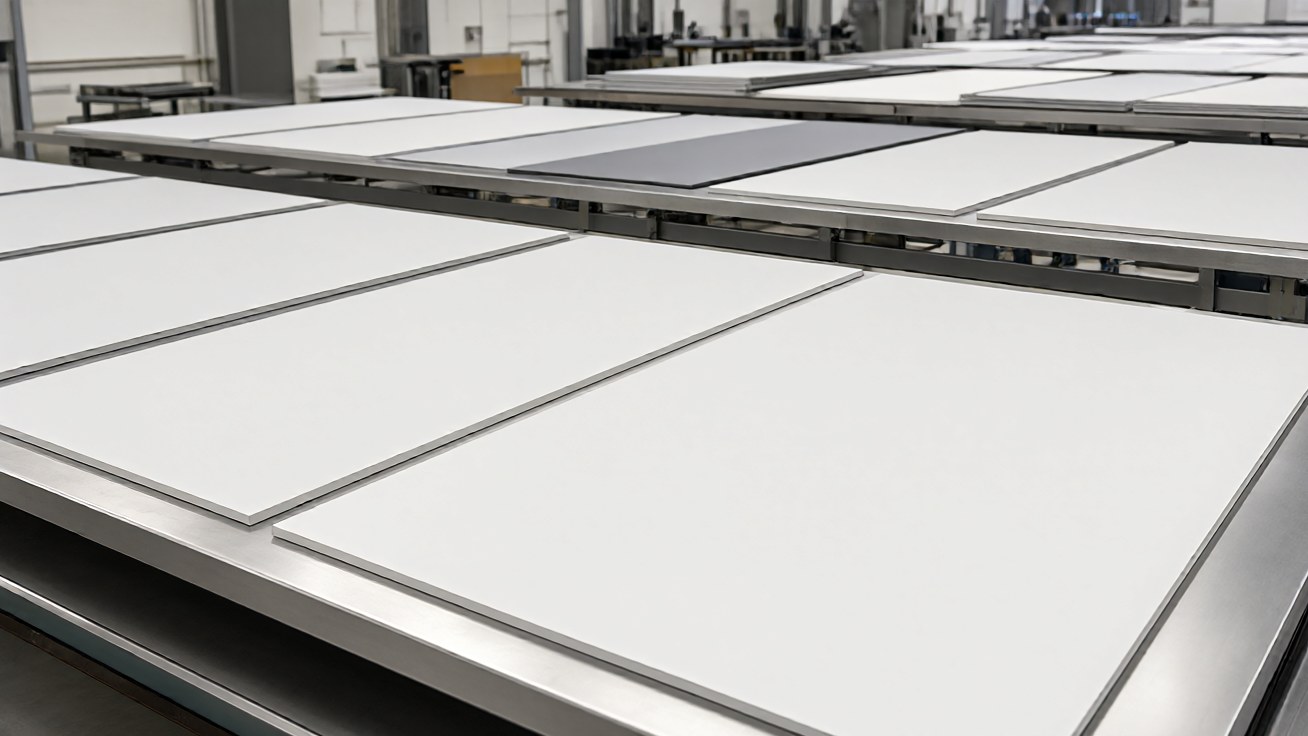
Typical lead times run from ten to twenty-five working days, with extra time needed for design approval and proof review. Because exhibition schedules are often tight, raising the signage requirement early gives the project room to absorb late content changes without rushing production.
Planning a new gallery or refreshing an existing scheme? Our team can help you turn a floor plan into a clear sign schedule. See our wayfinding solutions, read about our fabrication capabilities, browse related case studies, or request a quote for your next exhibition.