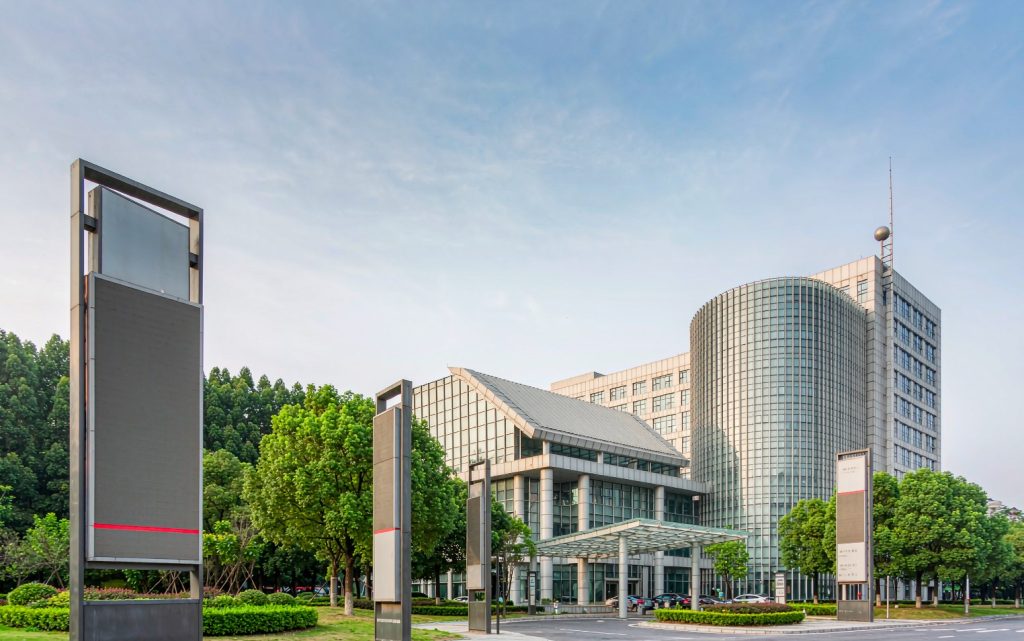
A large hospital or university medical campus is one of the most difficult places in the world to sign well. Every day, thousands of people who have never set foot there before need to reach a clinic, a ward, a laboratory, or a parking deck in just a few minutes, often while anxious, in pain, or juggling a child and a folder of paperwork. In that environment, wayfinding is not decoration. It is infrastructure that quietly determines whether a visit goes smoothly or turns into a stressful ordeal. This article walks through how a complete wayfinding system for a medical campus is planned, built, and installed, and what a single one-stop manufacturer actually brings to a project of this scale.
Why medical campuses struggle with wayfinding
The problem is rarely a lack of signs. It is a lack of a system. A campus grows over decades, with new wings, renamed departments, and repurposed buildings. Each addition tends to bring its own signage language: different arrows, different colors, different typefaces. Visitors read the result as noise. The first job of a wayfinding program is to impose a single logic on that complexity, so that wherever someone stands, the next decision is obvious.
Healthcare adds pressure that offices and shops never face. A meaningful share of visitors are not native speakers of the local language. Many are stressed or unwell. Some are children or elderly people moving more slowly than usual. Good medical wayfinding leans on pictograms, high contrast, and consistent placement rather than long sentences, because a symbol read at a glance beats a paragraph read under pressure.
Begin with consultation, not a catalogue
The most expensive mistake a facility makes is ordering signs from a catalogue before anyone has mapped the journeys people actually take. A credible program starts on site, with consultation. That means walking the routes from the car park to the front desk, from the lobby to the imaging suite, from the elevator banks to the discharge lounge, and noting where people hesitate.
From there the work moves through concept design, then detailed design, then fabrication, and finally delivery and installation. Keeping all of those stages under one roof matters more than it sounds. When the people who draw the signs also cut the metal and hang the panels, the gap between the drawing and the built result shrinks. Details that get lost in handoffs between separate vendors, like standoff depth, lighting temperature, and fixing tolerance, stay controlled from first sketch to final bolt.
What a full wayfinding package actually includes
For a medical campus, the package is rarely a single product. It is a family of signs that work together:
- Exterior monument signs that anchor the campus identity at main entrances and roadways.
- Directional totems and finger posts that route pedestrians between buildings and decks.
- Building and wing identifiers so each structure reads clearly from a distance.
- Interior floor directories and wall-mounted guidance near every major decision point.
- Room and door signs with names, numbers, and pictograms.
- Parking and transit signage, including accessible bays and drop-off zones.
The point is coherence. A visitor should feel the same visual hand from the gateway monument to the quiet sign outside a consultation room.
Materials and durability for healthcare settings
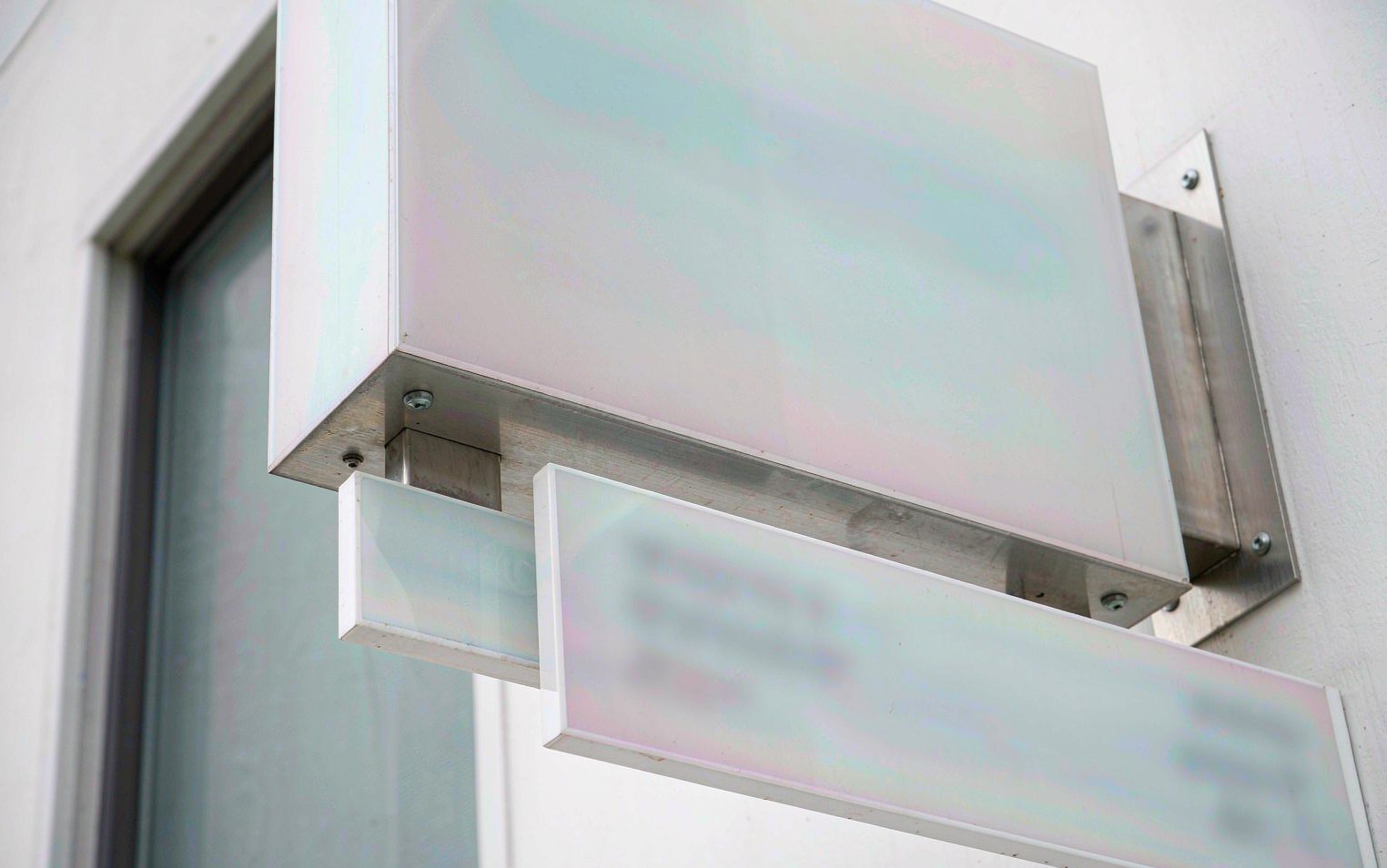
Medical environments are hard on signs. Outdoor units face sun, rain, and temperature swings. Indoor units face cleaning chemicals, trolleys, and constant touch. The right material choice is therefore a maintenance decision as much as an aesthetic one.
For exterior and high-traffic applications, brushed stainless steel and powder-coated aluminum hold up well and stay easy to clean. Acrylic faces carry both printed graphics and illuminated elements. Where signs are lit, a proper aging test matters: every illuminated module should run through a 48-hour LED aging test before it ships, because a flickering letter outside an emergency department is the last thing a facility wants. Outdoor lit elements should meet an IP65 rating so weather stays out of the electronics. Certifications such as CE, UL, and ISO are not paperwork; they are the shorthand that tells a facilities team the product has been built and tested to a known standard.
Accessibility and pictogram compliance
A sign that only works for sighted, fluent, unrushed adults is not good enough in healthcare. Universal pictograms let a parent, a foreign visitor, and a child all understand “emergency” or “exit” without reading a word. High-contrast pairings, such as dark text on a light field, keep messages legible for older eyes and in poor light. Where regulations require it, tactile characters and braille extend access to visitors with low vision.
Glare is another quiet enemy. A panel that looks crisp in a showroom can wash out under corridor lighting or a low winter sun. Specifying the right finish and avoiding glossy surfaces keeps information readable at the moment it is needed.
A quick reference for planners
| Element | Typical choice | Why it matters on a campus |
|---|---|---|
| Gateway monument | Stainless / aluminum, lit or unlit | Sets identity and reassures arrivals |
| Directional totem | Multi-panel, pictogram-led | Routes pedestrians between buildings |
| Door and room signs | Acrylic with tactile text | Accessibility and wayfinding at the last meter |
| Outdoor lit signs | IP65, 48h LED aging test | Survives weather and stays reliable |
| Finishes | Anti-glare, cleanable | Holds up under cleaning and corridor light |
Frequently asked questions
How long does a medical campus wayfinding project take?
After the design is approved, fabrication typically runs within a 10 to 25 working day lead time, depending on scope and finish. The overall program timeline also depends on site surveys, approvals, and installation sequencing, which is why consultation starts early.
Can one supplier handle design, fabrication, and installation?
Yes. A one-stop scope covering consultation, concept design, detailed design, fabrication, and delivery and installation keeps a single accountable partner on the hook from sketch to sign, which is the most reliable way to protect consistency.
Which materials work best outdoors on a medical campus?
Brushed stainless steel and powder-coated aluminum are the workhorses for exterior and high-traffic signage. They resist weather and cleaning, and they pair well with acrylic faces for illuminated or printed graphics.
Do you support bilingual and pictogram signage?
Bilingual text plus universal pictograms is standard practice for healthcare wayfinding, because a large share of visitors may not read the local language. The goal is a sign that communicates before it is read.
Are the signs certified for international or export projects?
Products are built to CE, UL, and ISO expectations and have been supplied to projects across more than 30 countries, so the same program can be repeated or adapted across locations.
How do we start a wayfinding project?
The practical first step is a site consultation and a review of the routes people actually take. From there a concept design can be shaped around real journeys rather than an assumed floor plan.
Start your wayfinding project
A medical campus lives or dies on small moments of clarity: the arrow that points the right way, the pictogram that needs no translation, the lit letter that still works at 3 a.m. Getting those moments right is a program, not a purchase. If you are planning signage for a hospital, clinic, or university medical campus, it helps to talk to a partner who can carry the work from the first site walk to the final installation.
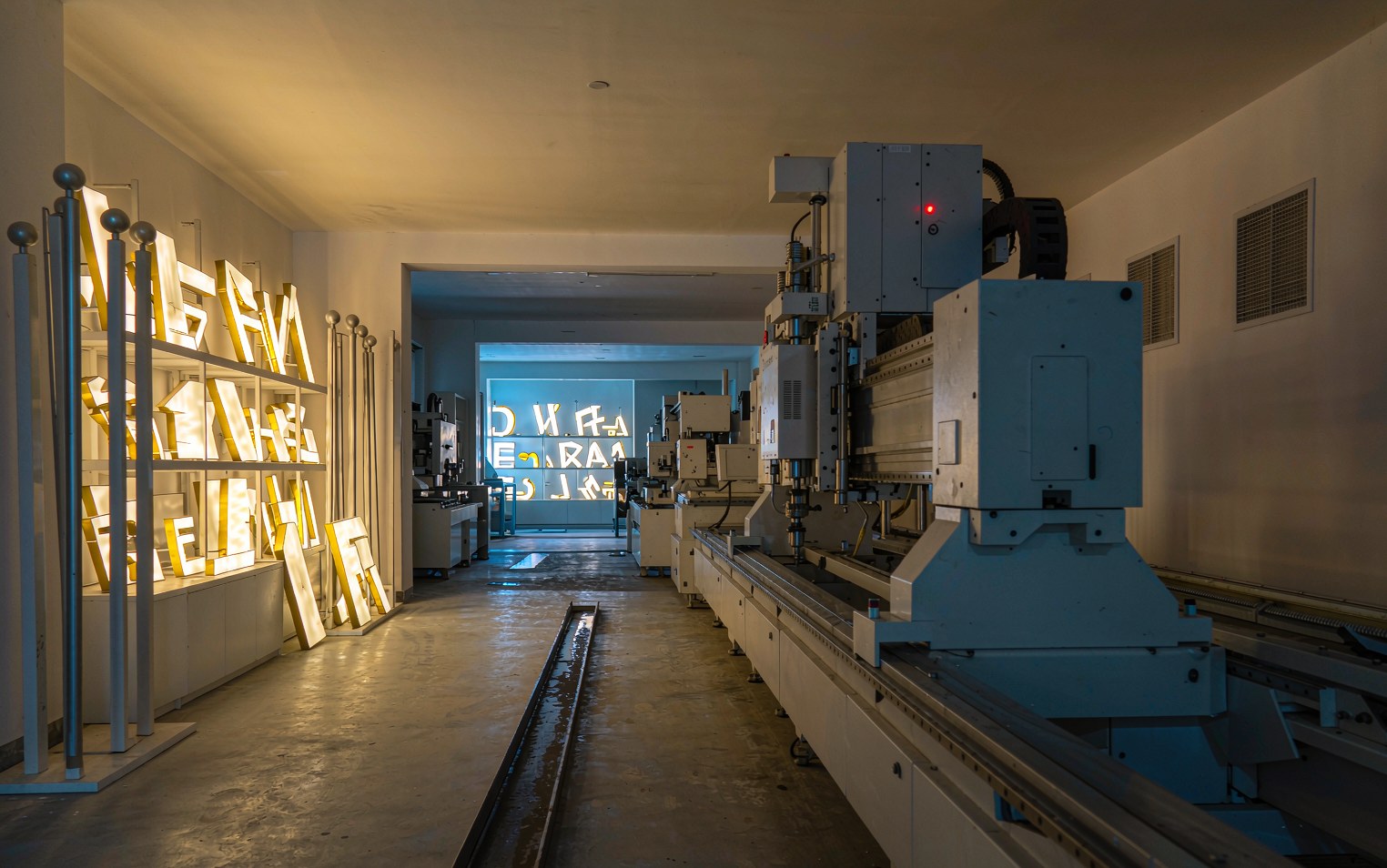
Our team designs, fabricates, and installs wayfinding and architectural signage from a 5,000-plus square meter facility in Guangzhou, with export experience across more than 30 countries. You can review our solutions, explore our capabilities, or read how our Guangzhou factory operates and how front-lit and halo-lit letters differ. When you are ready, request a quote or contact us to schedule a consultation.







